
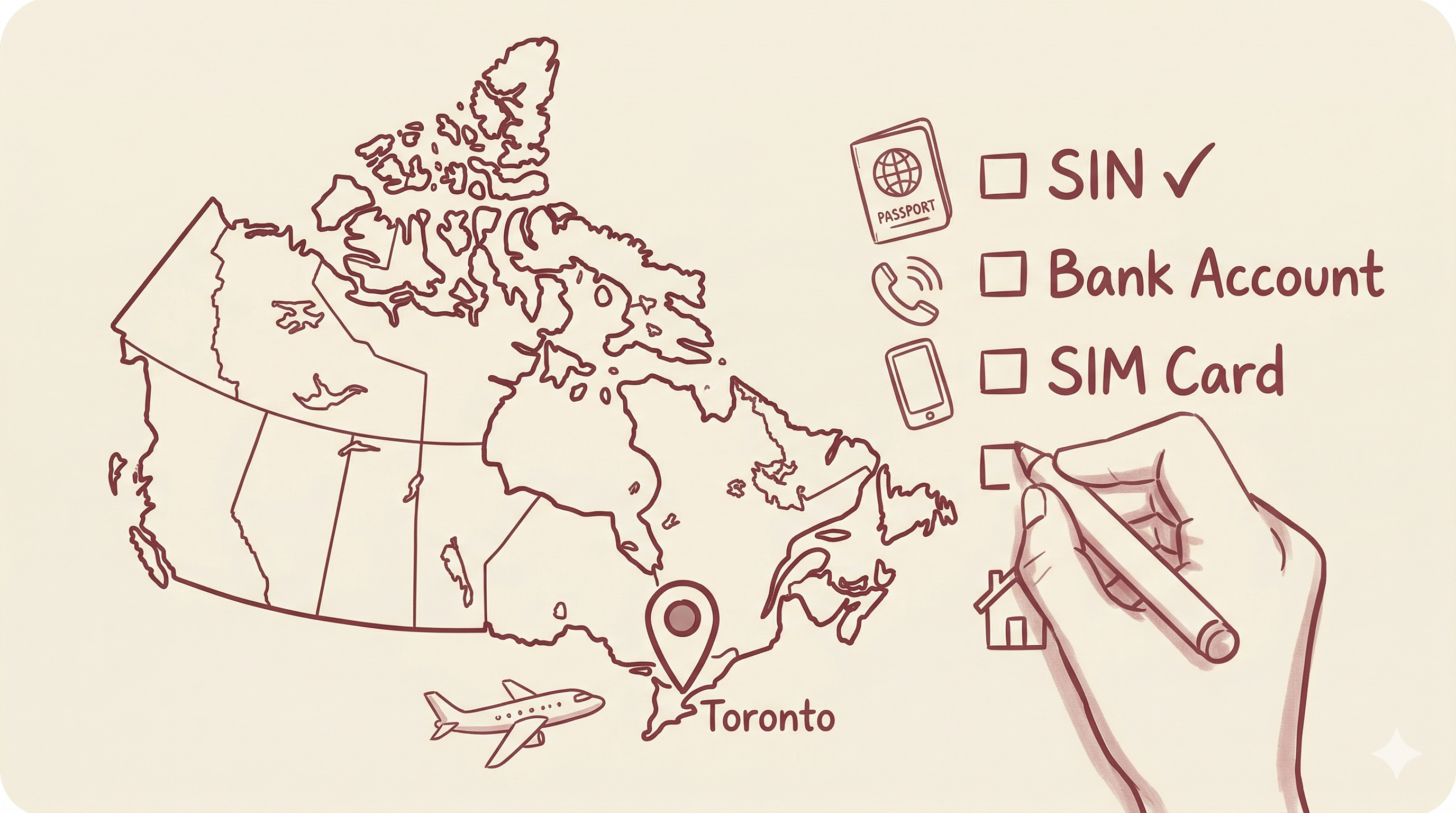
"The first seven days define your trajectory. Most students spend it chasing paperwork; the smart ones spend it building a foundation."
Day 1: The Landing Experience
Welcome to the Great White North. Stepping off the plane at Pearson or Trudeau is an exhilarating moment, but the administrative reality hits fast. Your first priority is the Study Permit. Ensure your Letter of Introduction and GIC documents are in your carry-on.
Pro Tip: The ArriveCAN App
Don't wait until the customs queue to organize your documents. Have your ArriveCAN receipt and housing address saved offline. Airport Wi-Fi can be notoriously temperamental during peak hours.
Securing Your Identity (SIN)
You cannot work or even open certain accounts without your Social Insurance Number. Service Canada offices are your first destination on Day 2.
Locate the nearest Service Canada centre via their online portal.
Bring your original passport and the Study Permit (ensure it mentions work eligibility).
Keep this number private—never share it over text or email.
Choosing Your Financial Partner
Canada’s banking landscape is dominated by the "Big Five." As an international student, you are a valuable client, so expect competitive offers.
| Bank | Student Offer | Key Perk |
|---|---|---|
| TD Canada Trust | No-fee account | Longest branch hours |
| RBC | Leo's Savings | Seamless GIC integration |
| Scotiabank | StartRight® Program | Scene+ points for movies/food |
Choosing Your GIC Bank — Think Physical Branches First
There are a few common options to open a GIC account: CIBC, Scotiabank, and Simply CIBC. Your education agent in India may recommend one — but before you agree, tell them you want a bank with physical branches in Canada.
Here's why it matters: CIBC and Scotiabank have physical branches in almost every city across Canada. Simply CIBC, on the other hand, is an online-only bank — there's no branch you can walk into. As a newcomer who's just learning how Canadian banking works, having access to a real branch where you can sit across from someone and ask questions is genuinely valuable. Don't underestimate that.
Get a No Annual Fee Credit Card — Not "$0 for the First Year"
When you open your bank account, the advisor will offer you a credit card. Pay close attention to the fine print. There's a big difference between:
- No annual fee — free forever, no catches
- $0 annual fee for the first year — after 12 months, you'll be charged $99–$139/year
Get the no annual fee card. Here's the bigger reason: never close your first credit card in Canada. Your credit score is partly based on how long your oldest account has been open — it's called credit history age. Closing your first card wipes that history. A no annual fee card costs you nothing to keep open forever, and it silently builds your credit history every month. You can always upgrade to premium travel or cashback cards later — we'll cover the full credit card path in a future post.
Skip the Cheque Book
If you're used to using cheques in India, here's a Canadian reality check: cheques are almost never used in student life here. Banks charge you for a cheque book, and you'll likely use zero of them. E-transfers (Interac) handle everything a cheque used to — rent, splitting bills, sending money to friends. Save your money and skip the cheque book when your advisor asks.
What Happens Before?
You need to get your phone plan before going to the bank — carriers ask for a Canadian phone number when you activate your account, and banks ask for one too. You need both, but the SIM comes first.
Both Arjun and Priya need a phone plan. Arjun already has that postpaid plan he signed at the airport kiosk — the one he doesn't fully understand yet.
Priya is about to show him exactly how much that decision is costing him — every single month.
Mobile & Connectivity
Avoid the major carriers (Bell/Rogers) if you're on a budget. Look at their flanker brands: Fido, Koodo, or Virgin Plus. You can often find "Back to School" deals with 50GB for under $40/month.
Arjun closes his banking app. The numbers make sense now — finally.
He still overpaid on his first plan. He still picked the wrong SIM at the airport. But he has a no-fee account, a credit card he'll keep for life, and a SIN number safely memorised.
That's more than most students figure out in their first month.
— Arjun, Day 5. CIBC Branch, Brampton.
Arrival Week Checklist
Want the Full Checklist as a PDF?
Get our 25-page comprehensive arrival guide featuring maps, budget templates, and more.

